Best LIMS Software in Kikuyu Kenya: A Practical Buyer’s Guide
Quick answer: For a diagnostic laboratory in Kikuyu, the right LIMS is the one that fits the real sample-to-report workflow, works with the laboratory’s instruments and existing systems, keeps result changes traceable, and gives staff clear reporting and user controls. Use a live workflow demo before making the purchase.
If you are comparing the best LIMS software in Kikuyu Kenya, do not start with a feature list. Start with the laboratory workflow: how samples are registered, identified, processed, reviewed, reported, billed and connected to the systems around the lab.
A good LIMS for a diagnostic laboratory should reduce manual data entry, keep sample and result records traceable, support secure reporting, and fit the lab’s actual operating model. For a facility in Kikuyu, the right choice also needs to make sense within Kenya’s wider digital-health and laboratory environment.
What is the buyer actually trying to solve?
Short answer: Choose a LIMS that connects the laboratory’s daily sample, testing, verification and reporting work instead of adding another disconnected system.
The practical job is simple: choose a laboratory information system that can handle daily diagnostic work without creating another disconnected system.
That means looking beyond patient registration. The system should cover the movement of a sample from request and collection through testing, result verification and final reporting. It should also provide the data controls needed when a laboratory has multiple users, instruments, test departments or collection points.
Kenya’s public-health digital environment shows why integration matters. The Ministry of Health’s SHIELD platform describes integration between electronic health records, laboratory information systems and other health-data sources, with data exchange supported through APIs or uploads. citeturn0search4
What should a LIMS for a Kikuyu laboratory actually include?
The basics are still important. A modern pathology or diagnostic laboratory should expect patient and doctor registration, test ordering, sample identification, barcode support, sample tracking, result entry, verification, report generation and user access controls.
Kenyan government laboratory specifications also show the broader scope expected from serious LIMS implementations. A Kenya government LIMS requirement document lists sample reception and registration, billing, test assignment, sample tracking, quality control, data storage, result review and approval, electronic data transfer, audit trails, reporting, inventory and regulatory compliance among the required functions. citeturn0search16
That is a useful buyer benchmark. You do not need every enterprise feature on day one, but you should know which workflow problems the software is expected to solve.
Why sample tracking matters more than a long feature list
Short answer: A LIMS earns its place when staff can see where a sample is, what has happened to it, who handled the result and what was finally reported.
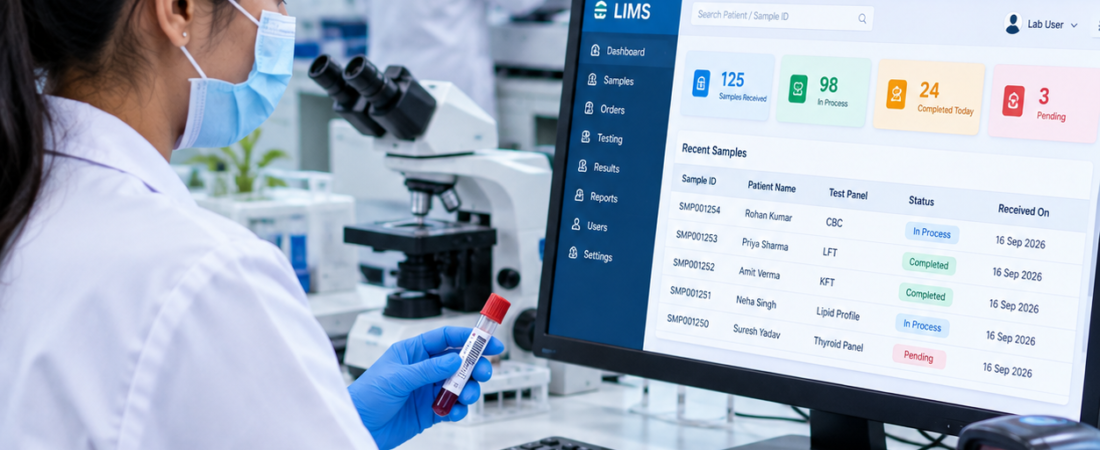
Ask a vendor to demonstrate one sample from start to finish.
Register a patient. Create the test request. Print or assign the sample identifier. Move it to the relevant department. Enter or import the result. Review it. Approve it. Generate the report. Then show exactly what happens if a result is corrected.
This exercise tells you much more than a presentation full of screenshots.
Kenyan laboratory specifications have included sample identification, barcode labelling, sample distribution, tracking, chain of custody, status monitoring, data validation and review/approval as LIMS functions. citeturn0search16
Analyzer integration should be tested before you buy
Short answer: If your lab uses automated analyzers, make the vendor demonstrate the actual result-transfer workflow with your instrument models before you sign.
If your laboratory uses hematology, chemistry or other automated analyzers, ask a very specific question: How will results move from the analyzer into the LIMS?
A system that requires technicians to retype every analyzer result defeats much of the reason for automation. Depending on the analyzer and integration design, data may be transferred through an interface, file import or another supported integration method. The exact method should be demonstrated with your actual instrument models before implementation.
This is also where buyers should separate a genuine integration from a simple CSV upload. File import may be useful, but it is not the same as a validated bidirectional analyzer interface.
bidirectional analyzer interfacing in LIMS
What about hospital and EMR integration?
A laboratory rarely works alone. Hospitals and clinics may already have an EMR, HMIS or other patient-management software.
The LIMS should therefore have a clear integration plan. At minimum, ask what information can enter the laboratory system electronically, what result data can be returned, what identifiers are used to match patients and orders, and how failed transactions are detected.
A real Kenyan example is documented by Jaramogi Oginga Odinga Teaching and Referral Hospital, which states that its LIMS records and processes samples and transfers results to its HMIS. The hospital also lists LIMS, HMIS and other systems as part of its ICT environment. citeturn0search7
That is the kind of workflow a buyer should ask vendors to demonstrate rather than accepting a generic claim that the product “supports integration.”
Cloud LIMS or locally installed software?
For a private diagnostic laboratory, the cloud-versus-local question should be answered after looking at connectivity, backup, access requirements, support and data governance.
A cloud LIMS is attractive when authorised staff need access from different locations and the laboratory wants centrally managed software. A locally installed system may make sense where the operating environment has specific infrastructure or connectivity requirements.
Do not choose based on the word “cloud.” Ask where data is hosted, how backups work, how access is controlled, what happens during an internet outage and how data is recovered if the primary environment fails.
Does the system support Kenya’s data and integration environment?
Kenya is moving toward greater interoperability between health information systems. The Ministry of Health’s SHIELD platform explicitly describes integration of laboratory information systems with EHRs, KHIS-2 and other data sources. citeturn0search4
That makes interoperability a practical procurement question for a laboratory in Kikuyu. Ask the vendor what APIs are available, what data formats are supported, whether integrations are documented, and whether the vendor has actually connected the product to the systems you use.
Do not accept “API available” as the end of the discussion. Ask to see the integration workflow.
Quality control and audit trails are part of the buying decision
A LIMS should make it possible to understand what happened to a result and who performed important actions.
Government laboratory specifications in Kenya have included audit trails, quality control, data validation, review and approval, as well as status monitoring. citeturn0search16
For a diagnostic lab, ask the vendor to demonstrate result correction, user permissions, approval levels, audit history and report version control. These are operational controls, not decorative features.
Billing and inventory should fit the laboratory workflow
If the lab collects payments directly, billing needs to connect with test ordering and reporting without creating duplicate work.
Inventory is similar. Reagent and consumable tracking becomes much more useful when it is connected to the tests and departments that use those materials.
Kenyan LIMS specifications have included billing, inventory management and laboratory workflow functions, while current Kenyan LIMS products also advertise billing, inventory, reporting and analyzer data-import capabilities. citeturn0search16turn0search5
What should a Kikuyu laboratory ask during a vendor demo?
Do not ask the vendor to show every feature. Give them a realistic workflow.
- Register a new patient and referring doctor.
- Create a test request and identify the sample.
- Show barcode or sample tracking.
- Process a result manually and through the laboratory’s actual analyzer workflow.
- Show abnormal-result handling and result verification.
- Correct a result and display the audit trail.
- Generate the final report for a doctor or patient.
- Show how billing, inventory and payment status work if those modules are required.
- Demonstrate an integration with the existing hospital or clinic system, if applicable.
- Explain backup, user permissions, support and data export.
[YOUR EXAMPLE: Add a real Kikuyu laboratory workflow or implementation problem here.]
Who should consider a LIMS such as PathXprt?
PathXprt is positioned as a cloud-based laboratory information management solution for diagnostic laboratories and related healthcare workflows. For a buyer in Kikuyu, the relevant question is not whether the product has the longest feature list. It is whether its workflow, integrations, reporting, user controls and support match the laboratory’s actual requirements.
For a small or growing laboratory, start with the daily workflow. For a hospital laboratory, put EMR/HMIS integration higher on the checklist. For a multi-site operation, focus on centralized visibility, user permissions, branch management and data exchange.
What should you verify before signing the LIMS contract?
Get the important answers in writing.
- Supported analyzer models and interface method
- EMR/HMIS/API integration scope
- Data hosting and backup arrangements
- User roles and audit-trail functionality
- Sample tracking and barcode workflow
- Result verification and report correction process
- Billing and inventory requirements
- Data export and migration options
- Implementation and training responsibilities
- Support response process and service terms
A useful procurement rule is simple: buy the workflow you have demonstrated, not the feature list you have been promised.
Final recommendation for laboratories in Kikuyu
If you are evaluating the best LIMS software in Kikuyu Kenya, shortlist systems that demonstrate the complete laboratory workflow, support the instruments and systems you actually use, provide traceability for results, and fit your expected growth.
Kenya’s current laboratory digitisation efforts make interoperability increasingly relevant, while Kenyan LIMS requirements already place emphasis on sample tracking, quality control, reporting, data exchange and auditability. citeturn0search14turn0search16
Before choosing a vendor, schedule a live demo using your real sample-to-report process. If the vendor cannot clearly show how your laboratory will operate after implementation, keep comparing.
Frequently asked questions about LIMS in Kikuyu
What is the best LIMS software in Kikuyu Kenya?
The best choice is the system that matches your laboratory’s sample workflow, instruments, reporting needs, integrations, user controls and support requirements. A live demo using your real workflow is a better test than a feature-count comparison.
Should a Kikuyu laboratory choose a cloud LIMS?
Choose cloud software when its hosting, backup, access control, connectivity and data-governance arrangements fit the laboratory. Ask what happens during an internet outage and how data is recovered.
Does a LIMS need analyzer integration?
If your laboratory uses automated analyzers, test the actual integration before signing. Ask the vendor to demonstrate how results move between your analyzer and the LIMS and how errors or corrections are handled.
What should I check during a LIMS demo?
Follow one sample from registration through collection, testing, verification and reporting. Then test result correction, audit history, user permissions, billing, inventory and any required EMR or HMIS integration.
Is PathXprt suitable for a laboratory in Kikuyu?
PathXprt is positioned as a cloud-based LIMS for diagnostic laboratories. The practical question is whether its workflow, integrations, reporting, controls and support match your laboratory’s requirements. Ask for a demonstration against your actual process.