Best LIMS Software in Thika Kenya: A Practical Buyer’s Guide
If you are looking for the best LIMS software in Thika Kenya, start with the laboratory workflow—not the longest feature list. A useful laboratory information management system should connect patient and sample registration, test processing, result verification, reporting, billing, inventory, user permissions, audit history and the integrations your laboratory actually needs.
This guide is for pathology laboratory owners, laboratory managers, hospital administrators, diagnostic-centre teams and IT decision-makers in Thika. You probably already understand sample collection, testing and reporting. The harder question is whether a LIMS will fit the way your team actually works.
What is a laboratory actually trying to fix with LIMS?
The real requirement is simple: your team needs to know where a sample is, which tests are assigned, what has been done, who handled the result, whether it was verified and whether the final report reached the right person.
A sample might be registered at reception, collected in another room, processed at a bench, tested on an analyzer, reviewed, billed and finally released. If those steps live in separate registers or applications, staff end up reconciling information manually.
For a deeper look at this workflow, see our Laboratory Information Management System guide.
What should a Thika laboratory expect from a LIMS?
A practical LIMS should cover the laboratory journey rather than acting as a digital result-entry screen.
Sample registration and tracking
Start with the sample. The system should record patient information, requested tests, sample type, collection details, status and relevant identifiers. Sample tracking becomes more useful as several tests, departments or locations become involved.
Kenya’s Ministry of Health published technical requirements for a national LIMS that include sample reception and registration, test assignment and scheduling, sample tracking, result processing, review and approval, and reporting. See the Kenya Ministry of Health LIMS requirements.
Result entry, review and approval
A useful workflow separates result entry from verification where the laboratory requires that control. It should also retain an understandable history when a result is amended.
Do not accept a generic “audit trail” checkbox. Ask the vendor to demonstrate what happens when a technician enters a result, a reviewer changes it and an authorised user approves the final report.
Analyzer and instrument integration
If your laboratory uses analyzers, ask exactly how results move between the instrument and LIMS. A vendor might support direct instrument interfacing, file-based import, or another method. The important point is whether the method works with your actual analyzer model and test configuration.
For a detailed explanation of two-way analyzer communication, read our guide to bidirectional analyzer interfacing in LIMS.
Which LIMS features matter most for a growing laboratory?
Feature lists are easy to inflate. Evaluate the functions that affect daily laboratory work.
| Area | What to check during the demo |
|---|---|
| Sample management | Registration, identifiers, collection, status and sample history |
| Result workflow | Entry, review, approval, corrections and audit history |
| Analyzer integration | Exact analyzer model, interface method, worklists and result mapping |
| Reporting | Report templates, verification status and delivery workflow |
| Inventory | Reagents, consumables, batches, stock and expiry controls |
| Billing | Test pricing, invoices, payments and user permissions |
| Users and security | Role-based access, activity history and account controls |
| Support | Implementation, training, troubleshooting and escalation process |
The same Kenya Ministry of Health requirements cover areas such as workflow automation, quality-control data, instrument or in-lab-system integration, reagent and lot tracking, sample registration, test scheduling, sample tracking, result review and reporting. These requirements are a useful reference point when preparing your own buyer checklist.
Cloud LIMS or locally hosted software—which fits better?
Do not choose cloud software simply because it sounds modern.
For a laboratory with multiple users or locations, browser-based access may simplify access to a central system. It also puts connectivity, user access, backups, security controls and vendor support into the buying discussion.
A locally hosted installation gives the organisation more direct control over its local infrastructure, but the laboratory takes on more responsibility for servers, backups, updates and availability.
The useful question is: Who is responsible for keeping the system available and the data recoverable? Put the answer into the vendor agreement.
Why local workflow and support matter in Thika
A laboratory does not buy software in isolation. It buys implementation, configuration, training and ongoing support.
That matters if your laboratory needs custom report formats, specific approval rules, billing workflows, integrations or help during a system changeover. Ask who will configure the system, who will train staff and who handles support after go-live.
Also ask what happens when your workflow changes. A LIMS should be evaluated against the laboratory you have, not a generic demo laboratory.
What should you ask during a LIMS demo?
Do not let the demo stay inside a polished presentation. Give the vendor a realistic scenario.
Ask them to register a patient, order several tests, collect a sample, assign the work, enter results, flag an abnormal value, send the result for review, approve it, generate the final report and show the audit history after an amendment.
Then test the awkward cases: an internet interruption, an unexpected analyzer result, an expired reagent batch, a user leaving the organisation or a doctor requesting a corrected report.
These scenarios tell you much more than another feature slide.
What are the common mistakes when buying LIMS?
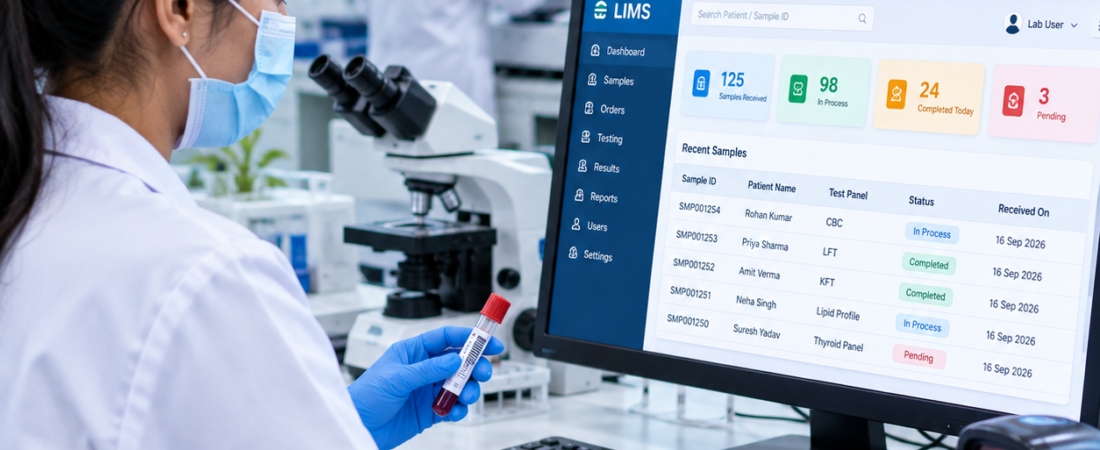
The first mistake is choosing software from screenshots. A good-looking dashboard does not prove that the sample workflow fits your laboratory.
The second is assuming that “integration available” means your analyzer or hospital system is already supported. Ask for the exact interface method and test it with your equipment.
The third is ignoring implementation. Master data, test configuration, reference ranges, report templates, user roles, workflows and staff training all need attention before go-live.
The fourth is failing to define ownership of data and backups. Get those responsibilities documented before implementation starts.
Who is a Thika LIMS actually for?
A LIMS becomes useful when manual registers, spreadsheets or disconnected applications create unnecessary work or make traceability difficult.
For a very small operation with minimal testing and a simple workflow, a full LIMS may be more system than the laboratory needs. Start with a requirements list and identify the functions you actually need.
For diagnostic laboratories, hospital laboratories and growing operations, the evaluation should go deeper into workflow configuration, integration, security, reporting, inventory and scalability.
How should you compare LIMS vendors?
Use the same test script for every shortlisted vendor. That removes much of the sales-demo theatre and makes the comparison useful.
- Write down your sample journey from registration to final report.
- List the analyzers, hospital systems and other software that need integration.
- Prepare one realistic report, billing example and inventory scenario.
- Ask every vendor to demonstrate the same workflow and exception cases.
- Document implementation, training, support, backup and data-ownership responsibilities.
[YOUR EXAMPLE: add a real PathXprt implementation or client workflow example here if you have one.]
How PathXprt fits the evaluation
PathXprt is positioned as a laboratory information management platform for diagnostic laboratories, hospital laboratories, clinics and pathology operations. If you are evaluating PathXprt for a Thika laboratory, the sensible next step is a workflow-based demonstration rather than a generic feature presentation.
Bring your common tests, a sample report, your billing process and the analyzer or hospital system you need to connect. Ask the implementation team to show the journey from registration to result verification and final report release.
Explore the PathXprt LIMS overview and the bidirectional analyzer interfacing guide before the demo.
Frequently asked questions
What is the best LIMS software for a laboratory in Thika?
There is no reliable one-size-fits-all answer. The right system is the one that matches your sample workflow, result controls, reporting, integrations, security and support requirements. Compare vendors using the same real laboratory scenario.
Does a LIMS need analyzer integration?
If your laboratory uses analyzers and wants to reduce manual result entry, analyzer integration should be part of the evaluation. Test the exact analyzer model and interface method before purchase.
Should a Thika laboratory choose cloud or local LIMS?
Choose based on connectivity, infrastructure, backup responsibility, access requirements, security controls and vendor support—not simply on whether the product is cloud-based or locally hosted.
What should I ask a LIMS vendor before buying?
Ask the vendor to demonstrate registration, sample tracking, result entry, verification, report generation, corrections, audit history, analyzer integration, billing and support using your laboratory’s actual workflow.
Is PathXprt suitable for diagnostic laboratories?
PathXprt is positioned for diagnostic laboratories, hospital laboratories, clinics and pathology operations. The practical next step is to test the platform against your own sample journey, reporting needs and integrations.
What should you do before selecting a LIMS in Thika?
Create a short buyer checklist before contacting vendors. Document your laboratory workflow, users, tests, report formats, analyzers, billing requirements, inventory process, integrations, backup expectations and support requirements.
Then give the same checklist to every shortlisted vendor.
The best LIMS software in Thika Kenya is not necessarily the product with the longest feature list. It is the system that fits your laboratory process, proves its integrations during a realistic demonstration, gives staff the controls they need and comes with an implementation and support plan you understand.
Recommended next step: book a PathXprt demonstration and test one complete sample journey—from registration through result verification and final report release—using your laboratory’s real workflow.