Best LIMS Software in Naivasha Kenya: A Practical Buyer’s Guide
Looking for the best LIMS software in Naivasha Kenya? Start with the laboratory workflow, not the feature count. A useful LIMS should keep the patient, test order, specimen, result and final report connected while giving staff clear control over what happens next.
Quick answer: For a Naivasha diagnostic, hospital, research, environmental, food or testing laboratory, the right LIMS is the one that fits the work your staff actually do. Check sample traceability, result verification, analyzer integration, reporting, user permissions, inventory, connectivity and support. Then test the system with one real sample journey before choosing a vendor.
This guide is written for laboratory owners, lab managers, pathologists, technicians, hospital administrators and IT teams who already understand day-to-day laboratory work but want to know what they should test before buying or replacing a LIMS.
What is the buyer really trying to solve?
Usually, the problem is not “we need software.” The problem is that too much laboratory information sits across registers, spreadsheets, paper forms, analyzer files and separate billing or hospital systems.
A LIMS should bring that workflow together: patient registration, test ordering, specimen collection, identification, processing, result entry or analyzer import, verification, report release and record history.
Kenya’s Ministry of Health has specified LIMS requirements in public-sector procurement documents covering areas such as specimen and test identification, workflow status codes, integration with existing information systems and laboratory data management. That is a useful reminder that LIMS selection is an operational decision, not just an IT purchase. Ministry of Health – Kenya
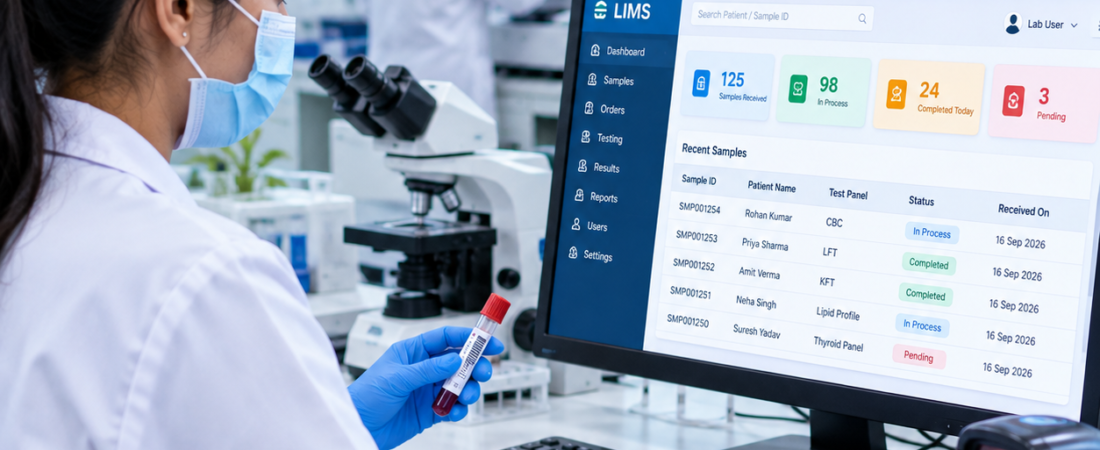
Best LIMS Software in Naivasha Kenya Image
Which LIMS features are already table stakes?
Most serious LIMS products will talk about sample tracking, patient registration, result management, reporting, billing, inventory, audit trails and instrument integration. The difference is in how those features behave during real work.
For example, Sanitas Diagnostics describes workflows covering customer data, sample scheduling and tracking, laboratory processing, inventory, result review and reporting. Sanitas Diagnostics
Matokeolab describes browser-based workflows and analyzer result import through formats such as CSV/Excel. Matokeolab
So don’t choose a LIMS because a brochure says “sample management.” Ask the vendor to show you exactly what the technician sees after a sample arrives, what happens after a result is entered, and what happens when something goes wrong.
Where should a Naivasha laboratory look beyond the feature list?
This is where many software comparisons become too generic.
A laboratory does not buy “sample management” as an abstract feature. It buys a chain of actions. A patient is registered. Tests are selected. A specimen is collected and identified. It moves to the right section. Results are entered or received from an analyzer. Someone verifies them. A report is approved and released.
If one step is poorly designed, staff create a workaround. That workaround usually becomes another spreadsheet, notebook or WhatsApp message. The software then exists, but the old process never really disappeared.
Kenya’s National Quality Management Framework for TB Diagnostic Laboratories says an electronic LIMS should be validated and licensed, support interoperability and adaptation, provide technical support, and control and trace personnel access to laboratory information. National Quality Management Framework
That leads to a better buying question: what happens when the normal workflow breaks?
What should the LIMS handle from the front desk to the final report?
Patient and test registration
The front desk should be able to register a patient, select the requested investigations and create the laboratory order without repeatedly typing the same information.
The important relationship is simple: patient → order → specimen → result → report. If those records become disconnected, finding and correcting an error becomes harder.
Sample collection and barcode tracking
Sample identification deserves more attention than it usually gets in a software demo.
Kenya’s recent national LIMS specifications describe unique specimen identification codes and workflow statuses including received, in progress, under review, approved, dispatched and rejected. Kenya Ministry of Health LIMS specifications
During a demo, ask one simple question: “If this sample is sitting somewhere right now, how do I know where it is and what is pending?”
For a deeper look at this part of the workflow, see Laboratory Sample Tracking System.
Result entry, verification and corrections
A good LIMS should make it clear who entered a result, who reviewed it and what changed if a correction was required. An authorized correction should not simply erase the earlier history.
Ask the vendor to demonstrate a corrected result during the demo. It is a much better test than watching a presentation about “audit trails.”
Analyzer integration
If your laboratory uses hematology, chemistry or other analyzers, ask exactly how results reach the LIMS.
Some systems support file-based imports; others provide deeper instrument interfaces. Sysmex describes digital laboratory solutions that manage data flow between instruments and LIMS and support workflows such as rerun and reflex testing. Sysmex Kenya – Digital Lab Solutions
Don’t accept “analyzer integration available” as a complete answer. Ask for the exact analyzer model, interface method, validation process and what happens if a result is rejected or does not match the expected patient or test.
If analyzer connectivity is one of your priorities, this related guide is useful: Bidirectional Analyzer Interfacing in LIMS.
Billing and payments
For a private diagnostic laboratory, billing sits close to the test-order workflow. The system should connect ordered tests to charges and receipts without making staff maintain a second manual record.
If mobile-money integration matters to your lab, ask the vendor to demonstrate the actual payment journey. A feature name in a brochure is not the same thing as a working workflow.
Inventory and consumables
Reagents and consumables need their own trail. Look for stock movement, batch information, expiry tracking and alerts that fit the way your laboratory purchases and uses materials.
The right level of detail depends on the lab. A small diagnostic centre may need a straightforward stock workflow, while a larger operation may need tighter controls around batches, multiple locations and user permissions.
Cloud or on-premise: what should a Naivasha lab choose?
There is no honest one-size-fits-all answer.
A cloud LIMS is attractive when the laboratory wants browser-based access and does not want to maintain its own application server. An on-premise deployment gives the organization more direct control over local infrastructure, but the organization also takes responsibility for server maintenance, backups, security and availability.
Connectivity matters in either model. Ask the vendor what happens during an internet outage and how unsent or incomplete work is handled.
Kenyan procurement documents show that deployment architecture and integration requirements need to be considered together. A recent KRA LIMS specification, for example, addresses API-based integration, concurrent users, on-premise deployment and technical support. KRA LIMS specification
Does the laboratory need hospital or eHospital integration?
If the laboratory operates inside a hospital or clinic, don’t evaluate the LIMS as an isolated application.
The useful question is what information needs to cross the boundary between systems. That might include patient demographics, test orders, specimen status, results, billing information or report status.
KEMSA documentation for laboratory implementation refers to laboratory information system configuration, instrument integration and integration with the Hospital Information System. KEMSA LIMS documentation
For a broader integration example, see eHospital LIS Integration.
How should you compare LIMS vendors before buying?
Use the same real workflow with every vendor. That makes comparisons much more useful than comparing feature lists.
| What to test | What to ask the vendor to demonstrate |
|---|---|
| Registration | Register a patient and create an order with multiple tests. |
| Sample tracking | Create a specimen, identify it and show its current status. |
| Analyzer workflow | Show how an analyzer result enters the correct patient and test record. |
| Result correction | Change a result and show the audit history before and after correction. |
| Report release | Approve a report and show how it reaches the intended recipient. |
| Integration | Explain the interface, authentication, error handling and reconciliation process. |
| Support | Explain implementation, training, support channels and escalation. |
One rule: don’t let the vendor choose only the easy demo scenario. Include one rejected sample, one corrected result and one integration failure or exception.
Is PathXprt suitable for a laboratory in Naivasha?
PathXprt is positioned as a cloud-based Laboratory Information Management System for diagnostic laboratories, hospital laboratories, clinics and individual laboratories.
For a Naivasha laboratory evaluating PathXprt, the sensible next step is a workflow-focused demonstration. Bring your own process. Show how registration, sample collection, testing, result review and report release happen today, then ask how the same journey would work inside the software.
That gives your team something concrete to judge instead of relying on a generic feature list.
What should you confirm before signing the LIMS agreement?
Before purchase, get written answers for the parts that would cause trouble later if they were unclear:
- Implementation scope and timeline
- Data migration and existing-record handling
- User roles and permissions
- Backup and recovery arrangements
- Analyzer and hospital-system integrations
- Report customization
- Training and post-go-live support
- Ownership, access and retention of laboratory data
If an analyzer, hospital system, payment service or reporting platform is essential, put it into the implementation scope. Don’t leave a critical integration as a vague future promise.
FAQ: choosing LIMS software in Naivasha
What is the best LIMS software in Naivasha Kenya?
There is no single system that is best for every laboratory. The right choice is the LIMS that matches your workflow, integrations, reporting needs, user controls, connectivity and support requirements.
What is the most important LIMS feature for a diagnostic laboratory?
Sample traceability is one of the first things to test. Staff should be able to connect the patient, order, specimen, test, result and final report and see the current status of the work.
Should a Naivasha laboratory choose a cloud LIMS?
A cloud LIMS is worth considering when browser-based access and reduced local infrastructure are priorities. Check connectivity, backup, security, support and outage procedures before deciding.
Can LIMS connect to laboratory analyzers?
Many LIMS platforms support analyzer integration, but the exact method depends on the analyzer, interface and software. Ask the vendor to demonstrate your actual analyzer model and the error-handling workflow.
Does a hospital laboratory need LIMS and HIS integration?
If laboratory orders, patient information or results need to move between the hospital system and LIMS, integration should be part of the implementation plan rather than an afterthought.
What should I ask during a LIMS demo?
Use one complete sample journey and include exceptions: a rejected sample, a corrected result, an analyzer issue and an integration error. This reveals much more than a standard feature presentation.
Final recommendation: test the workflow before you buy
For a laboratory in Naivasha, the best LIMS is the one that proves it fits the work your team actually does.
Don’t make the decision from a feature sheet. Prepare one real end-to-end case—from patient registration to report release—and ask every shortlisted vendor to run the same case. If the system handles the normal path and the awkward parts without forcing staff back to spreadsheets and paper, you have much better evidence for the buying decision.
Next step: take one real laboratory workflow from your Naivasha facility and use it as the standard demo checklist for every LIMS vendor you evaluate.