Best LIMS Software in Mombasa Kenya: A Practical Buyer’s Guide
Looking for the best LIMS software in Mombasa Kenya? Do not start with the longest feature list. Start with one real sample journey and test whether the software can take it from registration to verified report without unnecessary manual work.
Quick answer: For a Mombasa diagnostic, hospital, research, environmental, food or testing laboratory, the best LIMS is the one that fits the laboratory’s actual workflow, supports the required instruments and integrations, keeps result changes traceable, and gives staff practical control over reporting, users, connectivity and support. A live workflow demonstration is a better buying test than a brochure.
Who this guide is for: laboratory owners, pathologists, laboratory managers, quality teams, hospital administrators and healthcare IT decision-makers who already understand laboratory work and are comparing software for procurement or replacement.
What is the buyer actually trying to get done?
The job is simple: choose a laboratory information management system that keeps the patient or client, order, specimen, test, result and final report connected.
That sounds basic. In practice, it is where many LIMS projects succeed or fail.
A diagnostic laboratory may need patient registration, sample collection, barcode identification, test processing, result verification and report delivery. A food, environmental, research or industrial laboratory may follow a different path with work orders, analysts, instruments, quality checks, certificates and client communication.
The software should fit that process rather than forcing the laboratory to rebuild its working method around the application.
Explore our guide to Laboratory Information Management Systems.
What features are already table stakes?
Most serious LIMS products will mention sample management, result entry, reporting, user permissions, audit trails, inventory and instrument integration. Those are the starting point, not the reason to choose one product over another.
Sample registration and tracking
A sample should have a clear identity, assigned tests and visible status. Staff should be able to tell whether it is received, being processed, waiting for review or ready for release without searching through separate records.
Result entry and approval
Result entry needs a controlled path to review and release. If a result is corrected, the history should remain understandable instead of silently replacing what happened earlier.
Reporting
Ask the vendor to reproduce one of your real laboratory reports. Check fields, reference ranges, comments, signatures, formatting and the release process. A polished dashboard is not useful if the final report still needs manual work.
Billing and inventory
Private diagnostic laboratories may need billing and payments tied to test orders. Reagent and consumable management may also need stock movement, batch information and expiry tracking. The right depth depends on the laboratory.
Kenya Ministry of Health procurement material for the National Quality Control Laboratory includes requirements around sample registration, tracking, processing, review, approval and reporting, which is a useful reference for the type of workflow buyers should expect vendors to demonstrate. Kenya Ministry of Health – NQCL LIMS procurement.
Why analyzer integration deserves a live demonstration
“Analyzer integration available” is not enough.
Give the vendor the exact instrument list used by your laboratory. Ask how test orders move to the analyzer, how results return, how patient and sample identifiers are matched, and what happens when an interface fails or a result does not match the expected record.
Kenya Revenue Authority LIMS procurement documentation asks for instrument make, model and interface information when assessing integration. That is a sensible buying discipline for a Mombasa laboratory too. KRA LIMS tender information.
Show the analyzer list first. Then ask for the integration demo.
Read: Bidirectional Analyzer Interfacing in LIMS.
What if the laboratory is inside a hospital?
Then the LIMS should not be evaluated as an isolated application.
Discuss what needs to move between the laboratory and the hospital information system: patient details, orders, specimen status, results, billing information or report status. Also ask what happens when the interface is unavailable.
Kenya’s 2026 KNPHI LIMS requirements discuss laboratory data, integration and controls such as role-based access and audit trails. Kenya Ministry of Health – KNPHI LIMS requirements.
JOOTRH also publicly describes its information systems and notes the use of LIMS alongside hospital information systems. JOOTRH ICT & Records Department.
Read: eHospital LIS Integration.
What should a Mombasa laboratory check about traceability?
Audit trails sound impressive until you ask one practical question: show me exactly who changed this result and what happened next.
Kenya’s National Quality Management Framework for TB Diagnostic Laboratories says an electronic LIMS should be validated and licensed for use, support interoperability and adaptation, provide technical support, and control and trace personnel access to laboratory information. National Quality Management Framework for TB Diagnostic Laboratories.
For the buyer, test the actual workflow:
- Who entered the result?
- Who approved it?
- Who corrected it?
- When did each action happen?
- Can the history be reviewed by an authorized user?
Do this during the demo, not after signing the agreement.
Cloud or on-premise LIMS: what makes sense?
There is no universal winner.
A cloud LIMS can suit organizations that want browser-based access without maintaining application servers locally. An on-premise system gives the organization more direct control over local infrastructure, while also leaving it responsible for server maintenance, backup, security and availability.
For Mombasa, the better question is what happens when connectivity is poor. Ask about offline work, synchronization, backup, recovery and the location of hosted data. Do not accept “cloud based” as the whole answer.
Kenyan LIMS procurement specifications also show why deployment, integration, support and workflow requirements need to be considered together rather than as separate checkbox items. KRA LIMS technical requirements.
Which LIMS products should a Mombasa buyer investigate?
There is no evidence that one commercial LIMS is the universal best choice for every laboratory in Mombasa. A useful shortlist should be based on documented capability, local implementation fit and a live demonstration.
For example, Sanitas Diagnostics describes a web-based medical laboratory information system covering customer data, sample scheduling and tracking, laboratory processing, inventory, result review and reporting. Sanitas Diagnostics.
Other Kenya-focused or Kenya-relevant solutions also publish capabilities around laboratory workflows and instrument or data integration. These descriptions are vendor claims, so verify the exact functionality during procurement.
PathXprt can be considered where its laboratory workflow, reporting, integrations and implementation scope match the buyer’s requirements. The sensible next step is a product demonstration using the laboratory’s own process rather than a generic presentation.
How should you test vendors during a LIMS demo?
Skip the dashboard tour.
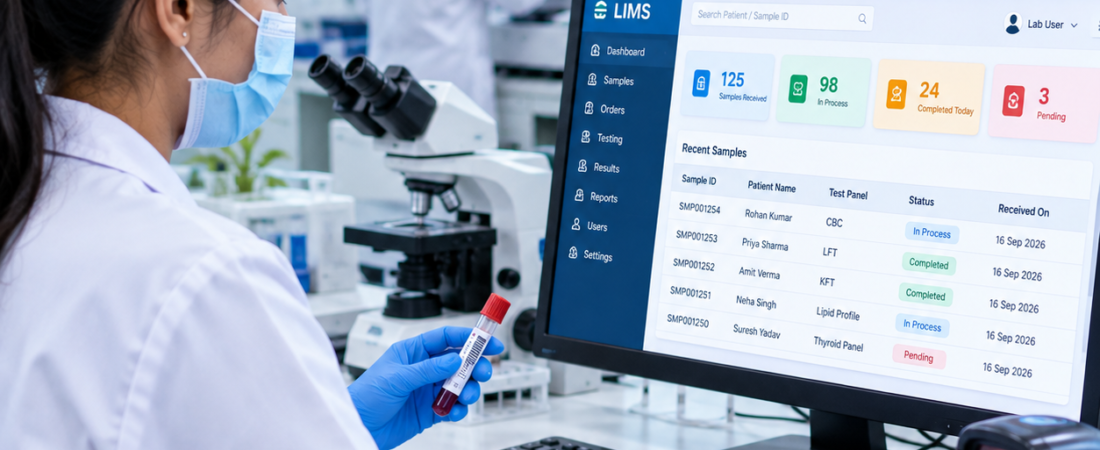
Give every shortlisted vendor the same scenario: register a patient or client, create the test request, identify the sample, assign tests, process the result, verify it, approve it and generate the final report.
Then make the scenario uncomfortable.
Reject a sample. Correct a result. Use a user who does not have approval rights. Simulate an analyzer or integration problem. Ask the vendor to show the audit history.
This reveals much more than a list of features.
What should be on your Mombasa LIMS buying checklist?
- Define the laboratory type and map the real sample-to-report workflow.
- List every analyzer or instrument that needs integration.
- Document hospital, HMIS or external system interfaces.
- Confirm barcode and specimen-tracking requirements.
- Test result correction, approval and audit history.
- Check report customization, billing and inventory needs.
- Ask how the system behaves during connectivity problems.
- Separate licensing from implementation, integrations, migration, training and support.
- Confirm data backup, recovery, access control and support arrangements.
- Use the same live workflow to compare every shortlisted vendor.
Is PathXprt the right LIMS for your Mombasa laboratory?
The answer should come from your workflow, not from a slogan.
If you are evaluating PathXprt, bring your real test catalogue, report format, sample journey, analyzer list and integration requirements to the demo. Ask the team to show registration, sample tracking, testing, result review and report release using that process.
That gives your laboratory something concrete to judge: how much manual work remains, how clear the controls are, and whether the system fits the way your staff actually operate.
Want to see how a LIMS could fit your laboratory?
Tell us about your laboratory workflow and the problems you want the software to solve. Request a PathXprt demo and use your own process as the starting point.
Frequently asked questions
What is the best LIMS software in Mombasa Kenya?
There is no single LIMS that is best for every laboratory. The right choice is the system that matches your workflow, integrations, reporting needs, user controls, connectivity and support requirements.
Does a LIMS need analyzer integration?
Only when the laboratory workflow requires it. If analyzer integration is important, give the vendor the exact analyzer list and ask for a live demonstration of order and result exchange.
Should a hospital laboratory integrate LIMS with its hospital system?
If patient information, test orders or results need to move between systems, integration should be part of the implementation plan. Ask about identity matching, permissions, audit history and failure recovery.
Is cloud LIMS better than on-premise LIMS?
Neither is universally better. Compare connectivity, infrastructure, backup, security, access and recovery requirements before choosing a deployment model.
How do I compare LIMS vendors?
Give every vendor the same end-to-end sample scenario and include at least one exception such as a rejected sample, corrected result or integration failure. Compare what actually happens, not just what the sales sheet promises.
Final recommendation
If you are buying LIMS software in Mombasa, do not choose the product with the biggest feature list. Choose the product that proves it can handle your real laboratory workflow, your instruments, your reporting requirements and your controls.
Before requesting a final quote, prepare one realistic sample-to-report case and make every shortlisted vendor run it. That single exercise will tell you more about fit than another hour of generic software demonstrations.
Next step: prepare your test catalogue, analyzer list and current sample journey, then use them in a PathXprt demo.