Best LIMS Software in Ruiru Kenya: Buyer’s Guide
Quick answer: The best LIMS software in Ruiru Kenya is the one that matches your laboratory’s actual sample-to-report workflow, required instruments, reporting needs, user controls and support model. For a diagnostic or hospital laboratory, start by testing registration, sample tracking, result verification, reporting and analyzer integration—not by comparing long feature lists.
This guide is for laboratory owners, pathologists, lab managers, operations teams and healthcare IT decision-makers evaluating a LIMS in Ruiru and the wider Kiambu area. You probably already know what a LIMS does. The harder question is whether a particular system will behave properly on your bench, at reception and when something goes wrong.
Bottom line: shortlist systems that fit your workflow, then make every vendor demonstrate the same real case from sample registration to verified report.
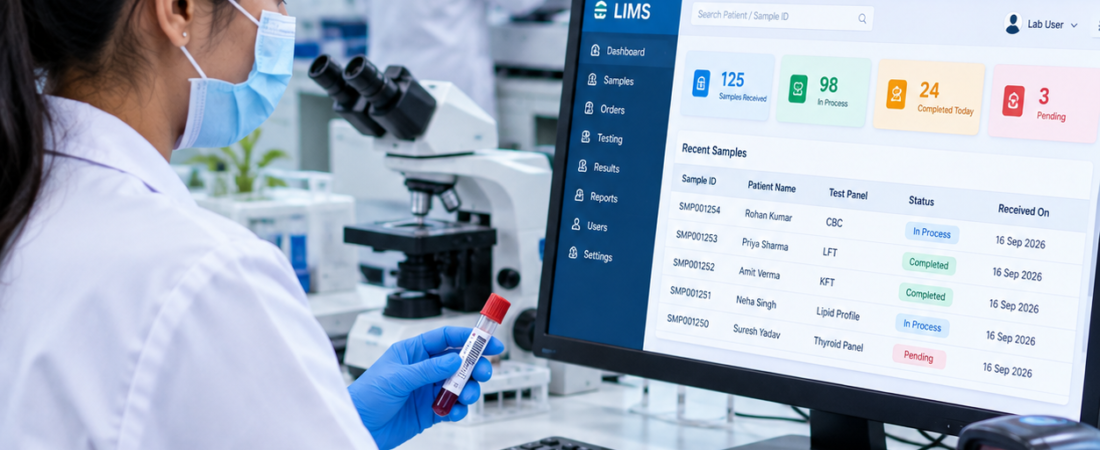
Best LIMS Software in Ruiru Kenya Image
What is the buyer actually trying to solve?
Short answer: The buyer is trying to replace disconnected manual steps with a controlled workflow that shows where a sample is, what tests were ordered, who handled the result and whether the report has been approved.
For a diagnostic laboratory, that could mean patient registration, test ordering, barcode identification, sample collection, result entry, verification and digital report delivery. A hospital laboratory may also need integration with a hospital information system. A research, food, environmental or testing laboratory will have a different workflow.
That difference matters. A LIMS that looks impressive in a sales presentation can still be a poor fit if its workflow does not match the way your laboratory actually works.
Read our guide to clinical laboratory LIMS for a deeper look at what a diagnostic lab should expect from the software.
Which LIMS features should a Ruiru laboratory check first?
Short answer: Start with sample identity, tracking, result control and reporting. These are the parts your staff will touch repeatedly, so small workflow problems become daily problems.
Sample registration and tracking
Every specimen should have a clear identity and status. Staff should be able to see what was received, which tests were assigned, where the sample is in the process and whether the result has been released.
Barcode identification is worth testing if your laboratory handles many specimens or collection points. Do not simply ask whether the system “supports barcodes.” Ask the vendor to show the complete process using your sample labels.
Result entry, review and correction
A result should move through a controlled path from entry to review and final approval. If a value is corrected, the system should preserve an audit trail rather than silently replacing the old information.
Give the vendor a deliberately incorrect result during the demo. Then ask who can change it, who can approve the correction and what another user sees afterwards.
Reports
Do not judge reporting from a generic screenshot. Give the vendor one of your actual report formats and ask them to reproduce the required patient or client details, test results, comments, approval information and delivery method.
Billing and inventory
Diagnostic laboratories may also need billing, payments, reagent tracking and consumable stock management. Define these requirements before implementation so they do not become expensive “phase two” surprises.
Why does analyzer integration deserve its own test?
Short answer: “Analyzer integration” should not be treated as a checkbox. The real test is whether your instruments can exchange the right patient, sample, test and result information with the LIMS.
Prepare the laboratory’s analyzer list before speaking to vendors. For each instrument, ask about the interface method, patient and sample identification, test mapping, result transfer and what happens when communication fails.
Kenya’s Ministry of Health has published national LIMS requirements that include laboratory sample operations and information-system requirements. The procurement material is useful context for buyers, although a Ruiru laboratory should select only the functions it actually needs. See the Ministry of Health tender listings.
Show the vendor your actual analyzer list. Then ask for a live interface demonstration.
Learn more about bidirectional analyzer interfacing in LIMS.
Should a Ruiru hospital laboratory integrate its LIS with other systems?
Short answer: If the laboratory is part of a hospital or larger healthcare operation, integration should be discussed before you select the LIMS.
Ask how patient and encounter information is mapped, how test orders enter the laboratory, how verified results return to the hospital system and how interface failures are handled.
Do not accept “API” or “HL7” as proof that a particular integration will work. The actual interface, data fields, ownership and testing process should be documented.
See what to check in eHospital and LIS integration.
What do Kenya’s current LIMS requirements tell buyers?
Short answer: Public-sector procurement in Kenya shows that laboratory software requirements go beyond registering samples and printing reports.
The Ministry of Health’s 2026 requirements for the Kenya National Public Health Institute’s national LIMS cover areas such as sample registration and identification, workflow, result validation and approval, quality records, inventory and reporting. The document is a national procurement specification, not a requirement that every private laboratory in Ruiru must implement the same scope.
The Ministry also published a 2026 tender for the supply, installation, implementation and commissioning of a comprehensive national LIMS for KNPHI. Check the current Ministry of Health tender listings.
The useful lesson for a local buyer is simple: write down your own workflow before comparing products. Otherwise, vendors end up selling you features instead of solving the laboratory’s actual problems.
Cloud or on-premise: what should a Ruiru lab choose?
Short answer: Choose the deployment model that fits your connectivity, access, backup and IT responsibilities. Do not choose cloud or on-premise simply because one sounds more modern.
If staff need authorized access from multiple locations, a cloud deployment might fit the operating model. If the organization wants its application and infrastructure maintained locally, an on-premise setup may be considered. In both cases, ask what happens when connectivity is interrupted.
- Where is laboratory data hosted?
- How are backups performed and tested?
- What happens during an internet outage?
- How are users authenticated and permissions managed?
- How is data recovered after a system failure?
These questions matter more than the deployment label itself.
Is local support more important than a long feature list?
Short answer: For a laboratory, support and implementation deserve the same attention as the software features.
A system still needs to be configured, users trained, reports tested, interfaces connected and problems resolved after go-live. Ask who will handle implementation, how support requests are raised, what training is included and who owns interface troubleshooting.
For a buyer in Ruiru, location is useful information, but it should not become the selection criterion by itself. A nearby provider still has to demonstrate that the software fits the laboratory.
Which LIMS products should a Ruiru buyer compare?
Short answer: Compare products that are willing to demonstrate your required workflow, not products that simply publish the largest feature list.
There are Kenyan-market and international LIMS options worth investigating. The shortlist should be based on your laboratory type, instruments, integrations, reporting requirements, data controls, implementation plan and support arrangement.
PathXprt is one option to evaluate for diagnostic-laboratory workflows. Exact features, integrations, hosting arrangements and implementation scope should be confirmed in a product demonstration rather than assumed from a marketing page.
How should you test LIMS software before buying?
Short answer: Give every shortlisted vendor the same real laboratory scenario and make them complete it live.
Skip the long dashboard presentation. Ask the vendor to demonstrate this sequence:
- Register a patient or client.
- Create the test request.
- Identify and track the sample.
- Assign the required tests.
- Enter or receive the result.
- Review and approve the result.
- Generate the report.
- Deliver the report through the required channel.
Then introduce problems. Use an incorrect test code. Correct a result. Remove approval rights from a test user. Ask what happens if an analyzer connection fails. Finally, ask the vendor to show the audit history.
This is where a polished demo becomes useful—or falls apart.
What should be on the Ruiru LIMS buying checklist?
Short answer: Put the laboratory workflow on paper before you request final proposals.
- Define the laboratory type and core workflow.
- Map collection, transport, testing, review and reporting.
- List every analyzer and instrument that needs integration.
- Document hospital, HMIS, ERP or external interfaces.
- Confirm barcode and sample-tracking requirements.
- Check reporting, billing and inventory needs.
- Test permissions, audit trails and result corrections.
- Test realistic connectivity conditions.
- Separate software, implementation, interfaces, migration, training and support costs.
- Require a live demonstration using your own workflow.
So, what is the best LIMS software in Ruiru Kenya?
Short answer: There is no defensible universal winner for every laboratory in Ruiru. The right choice is the system that proves it can handle your laboratory’s workflow, instruments, reporting, traceability and implementation requirements.
Before requesting a final proposal, prepare your test catalogue, analyzer list, sample journey, report formats and integration requirements.
Then ask every shortlisted vendor to demonstrate exactly that workflow from sample registration to verified report. That gives you something much more useful than a generic “best LIMS” ranking: evidence that the software fits your laboratory.
Frequently asked questions about LIMS in Ruiru
What is LIMS software?
LIMS stands for Laboratory Information Management System. It is software used to manage laboratory information and workflows such as sample registration, tracking, testing, results, reporting, users and related records.
What should a diagnostic laboratory in Ruiru look for in a LIMS?
Start with sample tracking, result entry and approval, reporting, user permissions, audit trails, analyzer integration and the support and implementation plan. Add billing, inventory and hospital integration when those are part of the laboratory’s workflow.
Does every laboratory need analyzer integration?
No. The requirement depends on the instruments and workflow. If analyzers need to exchange information with the LIMS, test the exact instruments and interface requirements before signing a contract.
Is cloud LIMS suitable for a laboratory in Kenya?
It can be suitable when the laboratory has the required connectivity and needs controlled access across locations. The buyer should still verify hosting, backups, authentication, outage handling and data recovery.
How should I compare two LIMS vendors?
Give both vendors the same workflow, sample types, report format and integration requirements. Compare what they demonstrate, what is included in implementation and support, and which requirements remain custom or unresolved.
Verification notes
The Kenya Ministry of Health references in this article describe public-sector procurement requirements and should not be read as certification or endorsement of any commercial LIMS. Product capabilities should be confirmed directly with the vendor during procurement. No universal product ranking is claimed.