Best LIMS Software in Wajir Kenya
Key takeaway: The best LIMS software in Wajir Kenya is the system that fits the laboratory’s real sample-to-report workflow, supports required integrations, protects laboratory data, and provides clear controls for results, reports and users.
This guide is for laboratory owners, managers, pathologists, quality teams and healthcare IT or procurement decision-makers in Wajir who already understand basic laboratory operations and are comparing LIMS before implementation.
What should the best LIMS in Wajir actually do?
Short answer: A LIMS should connect patient registration, sample tracking, testing, result review, approval and reporting in one traceable workflow.
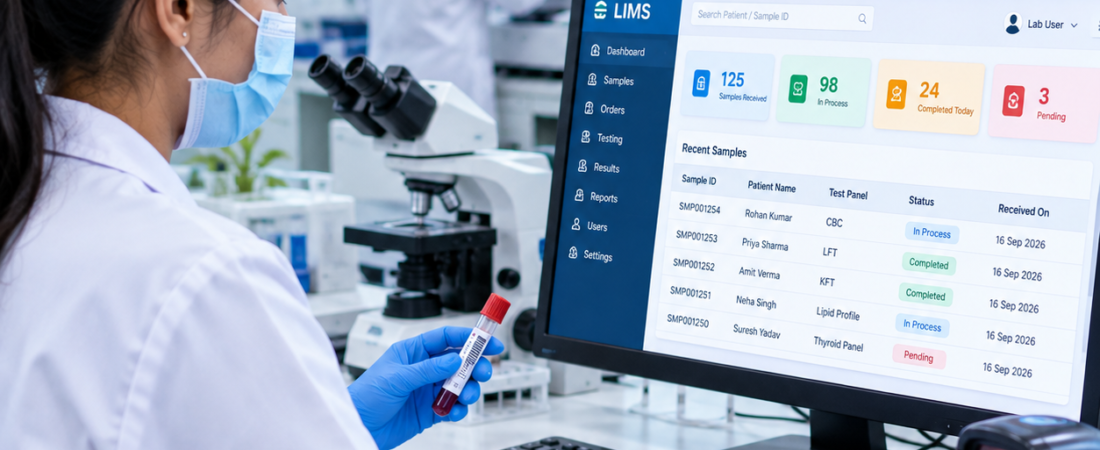
A useful LIMS should let staff see what was received, which tests were ordered, where the sample is in the workflow, who entered or changed a result, who approved it and what was finally reported.
Kenya’s Ministry of Health LIMS procurement requirements include sample reception and registration, test assignment and scheduling, sample tracking, quality control, data recording, result review and approval, reporting, instrument integration and staff training. The specification also requires demonstration of the proposed solution before acceptance. Kenya MoH NQCL LIMS specification
Why is a feature list a poor way to compare LIMS?
Short answer: A feature list shows what a vendor claims to offer; a workflow demonstration shows how the software behaves in real laboratory situations.
Ask each vendor to demonstrate one complete case: register the patient, create the specimen, assign tests, enter a result, correct it, send it for review, approve it and produce the report. Then test rejected samples, permission limits and instrument-connection failures.
Kenya’s NQCL requirements call for demonstration of proposed LIMS capabilities, making workflow testing a stronger buying method than screenshots or brochures alone.
Which LIMS features matter most for a Wajir laboratory?
Sample registration and tracking
Short answer: The system should keep the patient, specimen, requested tests and final report connected throughout the laboratory workflow.
Look for clear sample identifiers, collection details, status tracking and a history that staff can understand quickly.
Result review and approval
Short answer: Results should have controlled entry, review and approval, with a traceable history when a result is corrected.
During the demo, ask the vendor to correct a result and show exactly what the audit history records and which user roles can make the change.
Instrument integration
Short answer: If the laboratory uses analyzers, test the exact instrument interfaces required instead of accepting a general “many analyzers supported” claim.
Kenya’s NQCL requirements call for integration with instruments or other in-lab systems, while KNPHI LIMS requirements describe integration with laboratory instruments and external applications through secure APIs. Kenya MoH KNPHI LIMS requirements
Reporting and analytics
Short answer: Test the reports and operational views your laboratory actually uses instead of relying on a generic analytics presentation.
Give the vendor two or three real report examples and ask them to reproduce the workflow.
Inventory and quality control
Short answer: If reagent, lot, QC or instrument monitoring is important to the laboratory, include those workflows in the evaluation.
Kenya’s NQCL specification includes centralized QC data, reagent and lot tracking, instrument run monitoring and downstream analytics. NQCL LIMS technical requirements
Does connectivity matter when choosing a LIMS in Wajir?
Short answer: Yes. A LIMS must work reliably in the connectivity environment where the laboratory operates.
Ask what happens during an internet interruption. If offline functionality exists, test exactly what works offline, how synchronization works and how conflicting changes are handled. Do not assume that “cloud” automatically solves connectivity requirements.
How should security and audit history be tested?
Short answer: Test role-based access, authentication and audit history during the demo instead of accepting a general security statement.
Create separate analyst, supervisor and administrator roles. Test which actions each role can perform and ask the vendor to show the audit trail after a result is changed.
Kenya’s KNPHI LIMS requirements include authentication, role-based access, auditability and traceability. Kenya MoH KNPHI LIMS requirements
What should you ask a LIMS vendor before signing?
Short answer: Get written answers about data hosting, backups, export, integrations, implementation, training, support and post-go-live responsibilities.
- Where is laboratory data hosted?
- How are backups and recovery handled?
- How can the laboratory export its data?
- Which analyzers and external systems can be integrated?
- What implementation and training are included?
- Who provides technical support after go-live?
- How are updates and maintenance handled?
Kenya’s MoH NQCL requirements include installation, configuration, verification and validation, staff training and maintenance. NQCL procurement requirements
Where does PathXprt fit?
Short answer: PathXprt is worth evaluating for diagnostic and healthcare laboratory workflows, but the correct decision should be based on how well it handles your own Wajir laboratory requirements.
Use your real sample-to-report workflow during the demonstration and ask to see registration, testing, result review, approval, reporting, user controls and required integrations.
Explore PathXprt LIMS software and learn about Laboratory Information Management System workflows.
Who should not choose a LIMS based only on this guide?
Short answer: Laboratories with unusual regulatory requirements, specialized instruments, complex referral networks or large existing hospital systems should create a detailed requirements document before choosing software.
If the main bottleneck is connectivity, hardware, staffing or an existing HIS integration, confirm that software is actually the right solution before purchasing.
What is the practical recommendation for a Wajir laboratory?
Bottom line: Shortlist LIMS products only after checking the sample-to-report workflow, result traceability, required integrations and the vendor’s implementation and support plan.
Then run the same live demonstration with every shortlisted vendor. If the software handles both normal and exception cases without confusing staff, it deserves further evaluation.
Frequently Asked Questions
What is LIMS software?
Short answer: LIMS stands for Laboratory Information Management System. It is software used to manage laboratory samples, testing workflows, results, reports and related laboratory information.
What should a laboratory in Wajir look for in LIMS?
Short answer: Prioritize sample tracking, result management, reporting, user permissions, auditability, security, integrations, connectivity and implementation support.
Does every Wajir laboratory need analyzer integration?
Short answer: No. It depends on the instruments used. If analyzers are part of the workflow, confirm the exact models and interface method before purchase.
How should I compare LIMS vendors?
Short answer: Give every vendor the same patient-to-report workflow and compare sample tracking, result controls, reporting, integrations, security, implementation and support.
Should a laboratory choose cloud or local LIMS?
Short answer: Choose based on connectivity, infrastructure, security, backups, downtime procedures, access requirements and support—not simply because one deployment model sounds newer.
Sources
- Kenya Ministry of Health — NQCL LIMS technical specifications
- Kenya Ministry of Health — KNPHI LIMS requirements
- Kenya Ministry of Health — tender listings
Want to see how PathXprt fits your laboratory workflow?