Best LIMS Software in Marsabit Kenya: Practical Buyer’s Guide
Key takeaway: The best LIMS software in Marsabit Kenya is the system that proves it can manage the laboratory’s real sample-to-report workflow, maintain traceability, work with required integrations and connectivity, and provide appropriate security, training and support.
Who this guide is for: This guide is for laboratory owners, laboratory managers, pathologists, hospital administrators, healthcare IT teams and procurement decision-makers in Marsabit County evaluating LIMS for diagnostic laboratories, hospital laboratories and clinics.
What is the buyer in Marsabit actually trying to solve?
Short answer: The practical goal is to select a LIMS that gives staff a controlled path from sample receipt to final report, including identification, test assignment, tracking, result capture, review, approval and reporting.
A LIMS should do more than replace a paper register. The useful test is whether it makes laboratory information easier to control, trace, retrieve and share with authorised users.
Kenya’s Ministry of Health LIMS procurement requirements cover areas including sample reception and registration, test assignment, sample tracking, quality control, data processing, result review and approval, reporting, instrument integration and implementation support. Kenya MoH LIMS requirements.

What should you test before choosing a LIMS?
Short answer: Test one realistic patient-to-report workflow instead of judging the product from its feature catalogue.
Ask each vendor to register a patient and sample, assign tests, process or import a result, review it, approve it and generate the final report. Then correct a result and ask the vendor to show exactly what changed and what remains in the audit history.
Kenya’s NQCL procurement specification also calls for demonstration of the proposed solution’s capabilities before acceptance. Review the procurement requirements.
Why is sample tracking the first serious test?
Short answer: A useful LIMS should let authorised staff identify a sample, see its current status and review what happened to it throughout the laboratory workflow.
Ask what happens if a sample is rejected, recollected or corrected. Test whether staff can identify the change and its history without checking multiple registers.
Does the LIMS integrate with analyzers and other systems?
Short answer: If your laboratory uses analyzers, EMR/HMIS, billing or other digital systems, confirm the exact integrations and test them before purchase.
Kenya’s Ministry of Health describes LIMS integration with health information sources through SHIELD, including KHIS-2 and EHRs, with API-based electronic data loading. Kenya MoH KNPHI LIMS requirements.
Do not accept “integration supported” as sufficient. Ask which systems or analyzer models are supported, what data moves between them, how errors are reported and what happens when an interface is unavailable.
How should security and audit history be evaluated?
Short answer: Test user roles, authentication, approval permissions, audit history, backups and data access during the vendor demonstration.
Create separate analyst, supervisor and administrator roles. Then enter, correct and approve a result and inspect the audit trail. You should be able to answer: who changed it, what changed and when?
Kenya’s national LIMS procurement material addresses authentication, access control, traceability, confidentiality, integrity and audit requirements. See the Kenya MoH LIMS specification.
How important is connectivity for a LIMS in Marsabit?
Short answer: Connectivity should be tested as part of the buying decision, especially when the proposed system depends on cloud access or external integrations.
Ask what happens during an internet interruption, how failed transmissions are identified, whether any functions remain available and how data synchronizes after reconnection.
How should PathXprt be compared with other LIMS options?
Short answer: Use exactly the same workflow and scoring criteria for PathXprt and every other shortlisted LIMS. If you are comparing LIMS options across Kenya, you can also review our guides for Mombasa, Kwale, Kilifi, Tana River, Lamu, Taita, Garissa, Wajir and Mandera to compare the same buyer considerations in different local contexts.
For example, use one sample scenario and require each vendor to demonstrate registration, tracking, result correction, review, approval, reporting, permissions, audit history and integration exceptions. This creates a fairer comparison than comparing brochures.
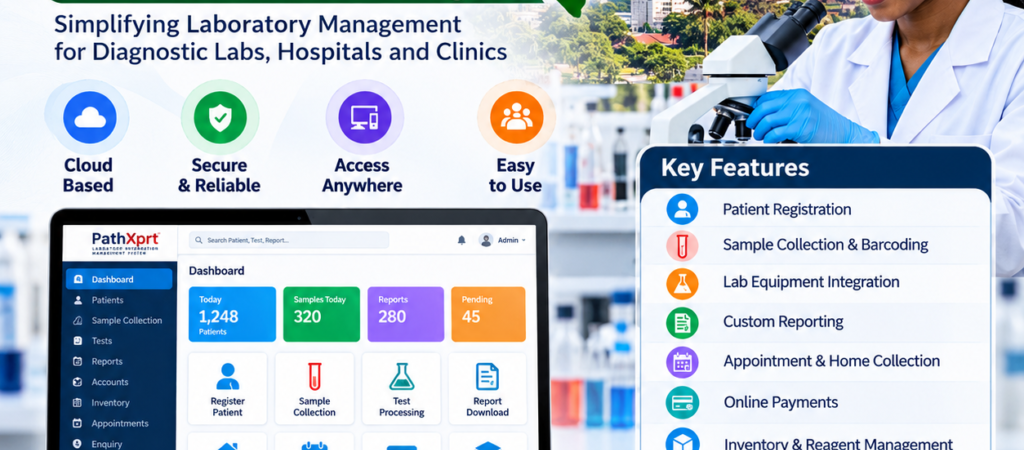
Explore PathXprt LIMS software.
What is a good LIMS not necessarily the right LIMS for?
Short answer: A feature-rich LIMS is not automatically the right choice if the laboratory does not need those functions or if the vendor cannot demonstrate the required workflow.
If the requirement is only simple record keeping, a complex implementation may add unnecessary work. Conversely, a laboratory that needs controlled approvals, traceability, analyzer integration and detailed reporting should not select software that cannot demonstrate those processes.
What should you include in a LIMS vendor demo?
Short answer: Use a consistent checklist so every shortlisted vendor is evaluated against the same requirements.
- Register a patient and specimen.
- Assign tests and show sample status.
- Process or import a result.
- Review and approve the result.
- Generate and release the report.
- Correct a result and inspect the audit trail.
- Test a rejected, recollected or delayed sample.
- Demonstrate analyzer or external-system integration.
- Test what happens when connectivity or an integration fails.
- Review user permissions, backups, training and support.
This workflow test is the practical evidence you can use when comparing LIMS vendors.
What should a Marsabit laboratory ask about implementation?
Short answer: Get written clarity on data migration, configuration, integrations, user training, testing, go-live support, backups, data export and ongoing technical support.
Ask who owns each implementation task and what is included in the quoted price. A technically capable LIMS can still become a poor purchase if implementation responsibilities are unclear.
Frequently Asked Questions
What is the best LIMS software in Marsabit Kenya?
Short answer: The best LIMS is the one that proves it fits the laboratory’s workflow, connectivity, integration, security and support requirements. Compare vendors using the same real-world sample-to-report scenario.
Does every laboratory in Marsabit need analyzer integration?
Short answer: No. It depends on the instruments used by the facility. If analyzers are part of the workflow, confirm the exact models and interface requirements before purchase.
Should a Marsabit laboratory choose cloud or local LIMS?
Short answer: Choose based on connectivity, infrastructure, security, backups, downtime procedures and support rather than assuming one deployment model is always better.
How should I compare LIMS vendors?
Short answer: Give each vendor the same patient-to-report workflow and compare sample tracking, results, reporting, integrations, security, implementation and support.
What should I test during a LIMS demo?
Short answer: Test registration, sample tracking, test assignment, result entry, correction, approval, reporting, permissions, audit history and integration failure handling.
Is PathXprt suitable for a laboratory in Marsabit?
Short answer: PathXprt can be evaluated against your laboratory’s requirements. Request a demo and test your actual workflow rather than relying only on a generic product presentation.
Practical recommendation
Bottom line: Do not choose a LIMS because it has the longest feature list. Choose the platform that proves it can manage your real laboratory workflow, protect data, support required integrations and provide a clear implementation and support plan.
For a Marsabit laboratory, document one complete sample-to-report workflow, list required analyzers and integrations, define user roles and then run the same demonstration with every shortlisted vendor.
Learn about Laboratory Information Management System workflows.
Request a PathXprt LIMS demo and evaluate the system against your laboratory’s real process.
Credible sources and further reading
For official guidance and procurement context, laboratory teams can also review the Kenya Ministry of Health resources and the World Health Organization for broader health information and laboratory-system guidance.